


This year the first Slovak university joined edcom, the European Institute for Commercial Communications Education – a step AMA was proud to broker and to fund for the first year. We see it as the start of a closer link between Slovak classrooms and our member agencies, who are always looking for fresh talent. We spoke with edcom President Kirstie Riedl (FH Wiener Neustadt) and Board member Joep Peeters (Fontys University of Applied Sciences) about edcom’s mission, what it offers universities and students, its pan-European competitions, and why Slovakia’s arrival matters.
Author: Richard Kopuník, AMA
For readers who are encountering edcom for the first time: what is edcom and what is it for?
Kirstie Riedl and Joep Peeters :
edcom ( European Institute for Commercial Communications Education ) edcom is Europe’s network for excellence in communications education, bringing together universities, students and the communications industry to shape the future of the profession. Founded in 2007 by EACA together with leading academic partners, edcom now connects around 46 universities across 16 European countries.
Communications education cannot stand still while our profession is changing so rapidly. edcom gives educators and industry a place to learn from one another, so that students graduate not only with knowledge, but with the skills, values and international outlook they’ll need to succeed.
Kirstie, you have been elected as the President of edcom for the period 2024 to 2028. What is your vision for the coming years and why is edcom important right now?
Kirstie Riedl:
The communications industry is evolving faster than ever, driven by AI, digital transformation and the growing need for responsible and sustainable communication. Universities and industry need to evolve together and that’s exactly where edcom creates value.
My vision is to make edcom the leading European platform where educators and practitioners learn from one another, exchange ideas and prepare students for the realities of tomorrow’s profession. That means strengthening the connection between what is taught in the classroom and the skills agencies and organisations increasingly need.
As Head of the Master’s programme in Green Marketing and Sustainability Communication at FH Wiener Neustadt, I’m particularly passionate about ensuring that sustainability and responsible communication become an integral part of communications education and not as specialist topics, but as essential professional competencies.
Finally, I want edcom to become even more representative of Europe by welcoming new universities and countries into our network. The first Slovak member is an exciting milestone, and I hope it will inspire others to join.
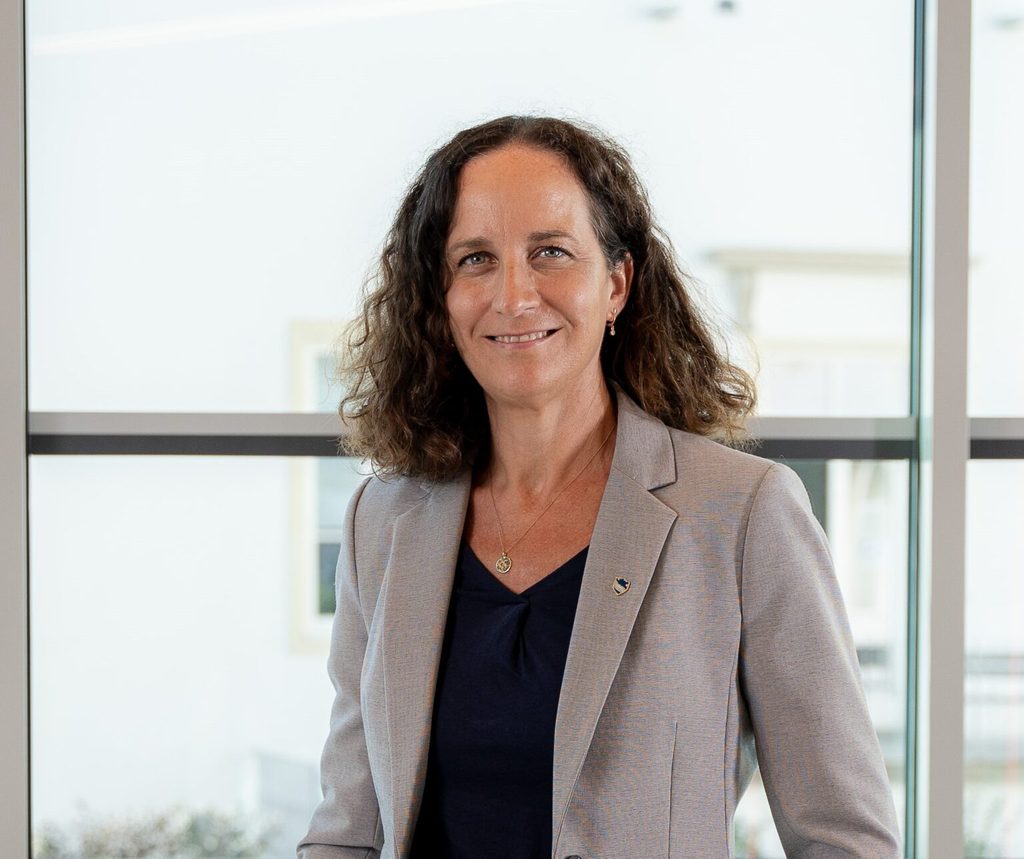
Photo: Kirstie Riedl, President of edcom
What does edcom offer to universities? Why should faculties join and what will members actually gain?
Kirstie Riedl and Joep Peeters :
Joining edcom means becoming part of a European community of universities that share a common goal: preparing the next generation of communications professionals.
Members gain access to an active network of around 46 institutions across 16 countries, creating opportunities to exchange teaching ideas, collaborate on research, organise guest lectures and develop joint educational projects like blended intensive programmes (BIP). Through EACA accreditation, universities can also benchmark their programmes against industry expectations and demonstrate educational quality.
Beyond that, edcom opens doors to international experiences from staff and student mobility to Blended Intensive Programmes and provides direct connections with Europe’s communications industry through EACA and its member agencies.
For many universities, the greatest value is that they are no longer working in isolation. They become part of a community that is constantly learning from one another.
And what does membership in edcom change for students studying at a member university?
Joep Peeters:
For students, edcom membership opens up very concrete opportunities to connect with the European advertising industry while they are still studying.
One of the most visible examples is the AD Venture competition, where students work on real client briefs with committed clients. It gives them the chance to present themselves on a European stage and compete against top student teams from across Europe. As an edcom student competition, supported by EACA and well known within the European advertising industry, AD Venture offers students a strong platform. The fact that the winning teams get to present on stage just before the Grand Effie says a great deal about its relevance and visibility.
Membership also creates unique opportunities for students to broaden their horizons through Erasmus+ funded Blended Intensive Programmes, internships, exchange minors and other international learning experiences offered through, or accessible via, the edcom network.
Perhaps most importantly, edcom offers students a highly visible and concrete pathway into the industry. Together with EACA, edcom helps connect strong students with agencies that are looking to hire talent during and after their studies.
Building a strong and relevant professional network is often one of the biggest challenges for students. By opening doors to the European advertising industry and to educational partners across Europe, edcom can be a real kick-start for students who are passionate about advertising.

Photo: Joep Peeters, member of the board of edcom
edcom is known for its competitions and activities. Which ones should Slovak students and educators look at first?
Joep Peeters:
For Slovak students and faculty, I would start with the activities that offer the most direct connection to international collaboration, real industry briefs and visibility within the European advertising community.
The first one is AD Venture, edcom’s long-running pan-European student competition, now in its 16th edition. In this competition, teams of four to six students develop a full campaign in response to a real client brief. It is a strong opportunity for students to experience what it means to work strategically and creatively under realistic industry conditions, while competing with talented teams from across Europe.
A second initiative to look at is edcom x Ad Net Zero, a newer competition focused on sustainable advertising. Here, students are challenged to rethink advertising through the Ad Net Zero framework and respond to real-world briefs with solutions that combine creativity, effectiveness and responsibility. This is especially relevant for students who want to engage with the future of the industry and the role advertising can play in the sustainability transition.
For students in the final phase of their studies, the Graduation Competition is also highly relevant. It recognises the best graduation and thesis work across edcom member universities and gives strong student research a European platform. For faculty, it is also a valuable way to showcase the quality and diversity of work produced within their programmes.
Beyond the competitions, Slovak students and faculty should also explore edcom’s Summer School, Blended Intensive Programmes, edTalks and publications. These offer ongoing opportunities for hands-on learning, international exchange and research-driven reflection. Recent examples, such as the Fontys AI Campaign Hackathon, show how edcom brings students, educators and industry partners together around emerging topics that are shaping the future of advertising.
So, I would say: start with Ad Venture for the clearest student competition experience, look at edcom x Ad Net Zero for sustainability and future-oriented creativity, use the Graduation Competition to give excellent thesis work more visibility, and engage with the Erasmus+ Blended Intensive Programmes, edTalks and publications to become part of the broader European learning community.
The key promise of edcom is to connect education with practice. How does this connection work in practice, both for employers and students?
Kirstie Riedl and Joep Peeters :
One of edcom’s greatest strengths is that industry isn’t simply an audience it is an active partner. Through our connections with industry and EACA, agencies help shape competitions, provide real client briefs, mentor students and participate in judging panels. That gives students valuable experience of working on authentic industry challenges before they graduate.
At the same time, agencies gain early access to talented, internationally minded graduates who already understand the realities of professional communications.
Our research also helps strengthen this connection. Projects such as Will I Stay or Will I Go? provide valuable insights into how graduates transition into employment and what employers are looking for, helping both universities and agencies prepare the next generation of professionals more effectively.
This year, the first Slovak university became a member of edcom, with AMA mediating and financing the first year of membership. What does the entry of the first Slovak university mean for edcom and what would you say to other Slovak universities and agencies?
Kirstie Riedl and Joep Peeters :
We’re delighted to welcome the Faculty of Arts at Constantine the Philosopher University in Nitra as edcom’s first Slovak member. It’s an important step not only for edcom, but also for strengthening collaboration between Slovak higher education and the wider European communications community. We’d also like to thank AMA for making this partnership possible.
Our message to other Slovak universities is simple: if you believe communications education benefits from international collaboration, practical industry engagement and sharing best practice, we’d love to welcome you to the network.
And to agencies: edcom is an opportunity to engage with tomorrow’s talent today through competitions, mentoring, internships, guest lectures and real-world projects. The stronger the connection between education and industry, the stronger our profession will be.
Check the original AMA’s article here!