Edcom is excited to announce the launch of the second edition of the Will I Stay or Will I Go Talent Survey, led by Paul Springer, Professor of Communication and Dean at the University of the Arts London.
This important project delves into the perspectives of both graduates and recruiters at a pivotal moment: when new talent transitions from education into the professional world.
Building on the insights from the first edition, this year’s survey revisits key questions, including:
Why should graduates pursue careers in advertising and agency professions?
What factors influence their career decisions in the communications field?
How well-prepared are graduates for the professional demands of the workplace, from the agency’s perspective?
By comparing the findings over time, this second edition aims to provide a more comprehensive and representative view of the evolving landscape across Europe. The survey will highlight shifts in expectations, skills, and industry needs.
The results of this survey will contribute to a new White Paper, offering valuable insights for both academia and industry, and helping to shape the future of talent in the communications sector.
If you’d like to participate in the survey, please get in touch with the Edcom Secretariat or your Edcom representative.
The European Institute for Commercial Communications Education (edcom) and the European Association of Communications Agencies – EACA, with the support of the World Advertising Research Center (WARC), have released “The advertising industry: should I stay or should I go?” White Paper. The initiative is based on the results of the surveys with the same name, aimed at final-year marketing communications students and industry recruiters.
The first questionnaire measured the appetite for pursuing a career in a creative, media or digital agency of 200 European students and enquired about their lived experiences during their university years. Simultaneously, the other survey addressed 200 European recruiters in the agencies. It focused on revealing those skills that are in demand the most and identifying where the difference between the two groups’ expectations lies.
The subsequent White Paper, co-authored by Paul Springer, former edcom President and Dean of Academic Strategy at the University of Arts London, and Laura Vingan, Communications Manager at EACA, further explored and illustrated the common themes that arose from the surveyees’ replies. These new and actionable insights will help bridge the gap between the freshly-graduates and the companies looking to hire them, as well as open the door to more research in the area of talent.
“The timing of this White Paper makes the findings even more intriguing: post-pandemic and during a global economic crisis, the survey of students and recruiters from across Europe surfaces the overlapping circumstances and current issues that impact both employers and educators. These include the changing nature of advertising work, the rise of #WFH and health & wellbeing”, said Paul Springer.
“If you asked our members what are the main pain points within their companies or national associations, you would hear that recruiting and retaining people is at the forefront”, added Laura Vingan. “Understanding why this happened and how come, after investing years and resources in their communications studies, students are considering other paths is what we wanted to uncover. This White Paper answers questions some recruiters did not know they had in the first place.”
“This first-ever done study amongst recruiters and students also puts the spotlight on the advertising industry as a place where people can have an impact on the world and enjoy a creative and flexible career. In the talent war we’ve all been facing, it is vital that we steadily advocate these benefits to the newer generations who have begun to question their career choices more and more. There is no other industry where the power of ideas can influence and have a positive impact, at the same time, on brands, business agendas, citizens and consumer behaviours”, continued Christian de la Villehuchet, Global Chief Integration Officer at Havas and President of EACA.
Catherine Driscoll, Commissioning Editor EMEA, WARC, said: “Finding and retaining diverse new talent is a priority for all sectors of the advertising industry. This research sheds light on the expectations and motivations of Gen Z graduates and will be invaluable in enabling agencies to connect with the next generation of advertising talent.”
The past October members’ meeting saw the election of our new edcom President, Gilles Nakhle. Professor and International Academic Projects Manager at Sup de Pub, Paris, Gilles has developed an exciting programme for his 2-year tenure.
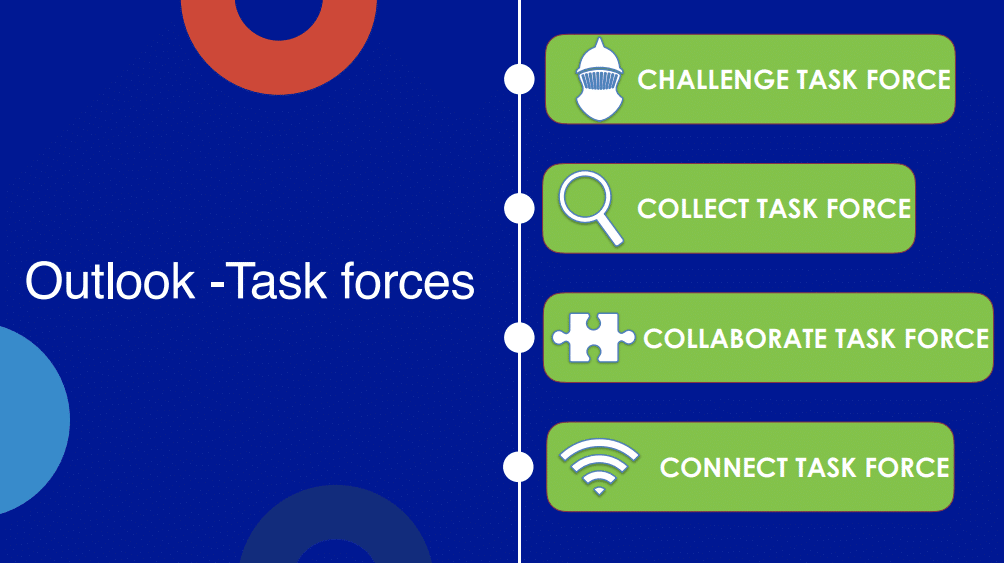
Challenge. Collect. Collaborate. Connect.
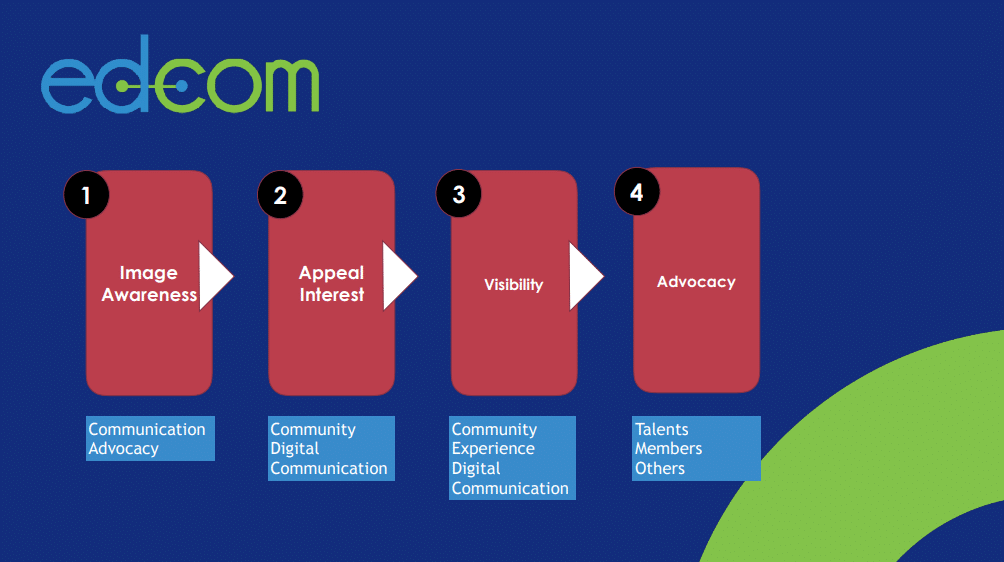
These are the 4 C’s that sum up the programme presented during the last Board meeting on 17 February to grow and improve the EDCOM network. These points are based on the main challenges EDCOM is currently facing, the first and main of which is a lack of image and awareness. While this would be the first objective, others would include recruiting new members as well as encouraging existing members to be more involved and become EDCOM advocates.
Each with its own dedicated Task Force, these are the 4 C’s proposed as the line to be used for all future EDCOM communications:
Challenge: to introduce new competitions for current members. As Ad Venture Student Competition continues to be a huge success, the Challenge Task Force would have the goal to come up with new ideas for competitions. Challenges could also extend to academics talents and students talents by creating initiatives such as TEDx talks. Other initiatives such as The Talent Academy could be the new community.
Collect: to develop a European research around the Gen Z, conducted by students and sponsored by clients or research agencies. Some of the members have manifested their interest to this action and could contribute to form the Collect Task Force. Furthermore, this could help recruiting members that are well-known for research, all the while keeping new information centralised with very frequent collaborations.
Collaborate: to reinforce and expand the current network, encouraging mobility through collaborations between universities around topics on a monthly basis, as well as strengthening existing collaborations with partners (EACA, D&AD, Cannes Festival of Creativity, WARC) and extending new ideas of partnerships in other areas such as European institutions, charity entities and NGOs. A Collaborate Task Force is a necessity!
Connect: to communicate more efficiently and consistently internally and externally and most importantly using new digital marcomms. The Connect Task Force would be the most important one, aiming to decide the most efficient platform to communicate both internally and with stakeholders, such as students (through the use of socials like Tik Tok and Instagram). Having a platform where information about all members’ and partners’ projects to never miss out on chances to collaborate.
With this new programme and task forces, the new President hopes to make EDCOM the reference in communication education and beyond on a European level, develop a positive inspiring image and encourage new members and partnerships and strengthen pre-existing relationships between member universities ensuring the creation of communities and EDCOM advocates. What an exciting 2-years ahead!
We use cookies to ensure that we give you the best experience on our website. If you continue to use this site we will assume that you are happy with it.