2025 December edcom Members’ Meeting | Summary

Edcom Members’ Meeting – December 2025

The December Edcom Members’ Meeting took place on 9 December at the WPP Campus in Brussels, gathering educators and industry partners for an afternoon of constructive discussion and collaboration. A warm thank you to all who joined and contributed to another successful edition.

Updates from the Secretariat

The Secretariat shared the latest developments across the network. While edcom continues to attract interest from institutions, recent departures and persistent regional gaps highlight the need to strengthen recruitment efforts, particularly in Northern, Eastern, and Southern Europe. Members were encouraged to invite potential partners and to engage with their National Associations (NACs), which can support mobility and membership processes.

Highlights from the Presentations

The agenda featured three insightful presentations.
• The Public Affairs update offered an overview of major EU digital and media regulations, including the AI Act, the Democracy Shield, and new rules on political advertising.
Access to the presentation is exclusive to EACA/edcom members. Please email anna.fanchini@eaca.eu or francesco.bottegal@eaca.eu to receive the materials.

• The Ad Net Zero update reflected on this year competition’s judging process, shared survey results, and outlined opportunities for deeper collaboration on sustainability.

The AI & Immersive Technologies in Education presentation highlighted the importance of a structured approach to integrating AI and immersive technologies in education. It also emphasized fostering student creativity by encouraging them to start projects without AI.

Key Themes and Strategic Directions

Discussions throughout the meeting centred on edcom’s future strategy. Members reviewed the development of the Value Proposition, which will help articulate what edcom offers to students, programme leaders, universities, industry partners, and alumni. Strengthening industry collaboration, enhancing alumni visibility, and supporting student employability were identified as central priorities.

AI and immersive technologies were also key themes, with members underscoring the importance of building AI literacy while encouraging students to begin the creative process independently before using AI tools.

Want to learn more about the meeting? Click here and access the full report.

Showcasing the Next Generation of Creative Talent at Effie Europe Day

On 10 December, during Effie Europe Day, edcom celebrated student excellence at the All Hands Meeting held at the Art & History Museum in Brussels. The 2025 Ad Venture winners, Charlotte van Roessel and Giulia Wolf, presented their project, which scooped first place at this year’s edcom Adventure Student Competition, organised in partnership with Taylor of Harrogate.
The session also featured the Ad Net Zero winners, Lélia Bterrani and Rory Harrison, who presented their sustainability‑driven project: a short creative video designed to educate and inspire audiences about Action 5 of the Ad Net Zero framework, which promotes sustainable consumer behaviour. Their compelling approach further reinforced edcom’s commitment to responsible creativity. Watch their winning project now.

Looking Ahead

Preparations are underway for the March 2026 Members’ Meeting, which will include expanded training elements. Members also expressed strong interest in organising an all-day online Green Conference during Black Friday week next year.


Winner Announcement – 2025 Ad Net Zero Competition

Brussels, 26 November 2025: The European Institute for Commercial Communications Education (edcom) and the European Association of Communications Agencies (EACA) are delighted to announce the winners of the Ad Net Zero x edcom Student Competition, created to empower students across Europe to imagine bold, creative solutions driving the advertising industry’s journey to net zero.

The Ad Net Zero Student x edcom Competition invites students to respond to a real sustainability-focused brief connected to the Ad Net Zero Action Plan, challenging them to develop innovative ideas that inspire behavioural change and demonstrate how advertising can support the transition to a low-carbon future. By merging creativity, strategic insight and environmental responsibility, the competition aims to nurture a new generation of purpose-driven communicators.

The competition is rooted in the structure of the Ad Net Zero Action Plan, made up of five core pillars known as Actions 1 to 5. These actions guide the industry in reducing carbon emissions across business operations, production, media planning and buying, awards and events, and the influence advertising has on consumer behaviour. Students were asked to reflect these principles in their creative approach, ensuring that their ideas align with real-world sustainability priorities within the advertising sector.

The team composed of Rory Harrison & Lélia Bterrani, from ISCOM: Institut de Communication et de Publicité, Paris, took first place in the 2025 edition of the competition, under the supervision of Rebecca Dry, Director of ISCOM’s International Communication Programme and Senior Professor.

Rory Harrison and Lélia Bterrani, winners of the 2025 edition, shared:

“Winning this competition has been incredibly rewarding, especially after several all-nighters on a tight deadline! We are truly proud to represent ISCOM and would like to thank Rebecca Dry, Edcom, and Ad Net Zero for giving us the opportunity to take part and put our creativity to work for such a meaningful cause. We are extremely grateful for the recognition.”

Kirstie Riedl, edcom President and Head of the Master Programme in Green Marketing at FH Wiener Neustadt, highlighted the strong level of creativity and commitment shown by the students. Mary O’Sullivan, Director European & International Markets at Ad Net Zero, noted that the exceptional quality of the submissions reflects the promising future of the industry and the importance of reinforcing sustainability as a core professional skill.

The winners of this year’s competition will have the opportunity to present and share their work at the EACA All Hands Meeting on 10 December, before regional leading industry figures and EACA Members.

The 2025 jury brought together an exceptional group of academic and industry experts from across Europe and beyond. Their combined experience ensured a well-rounded and insightful review of all submissions.

Jury members:
Rosie Hand, Head of Advertising and Communications, TU Dublin
Sam Hendra, Supporter Engagement Manager, Ad Net Zero (Global)
Magdalena Spisak, Head of Membership & Industry Relations, Ad Net Zero Poland and SAR
Kirstie Riedl, Edcom President / Head of Master Program Green Marketing, University of Applied Sciences Austria
Jenn Gunn, Head of Sustainability, Ad Net Zero New Zealand
Kate Goldsmith, Awards & Performance Director, IAPI Ireland
Nicolas Bordas, Chairman, TBWA Europe
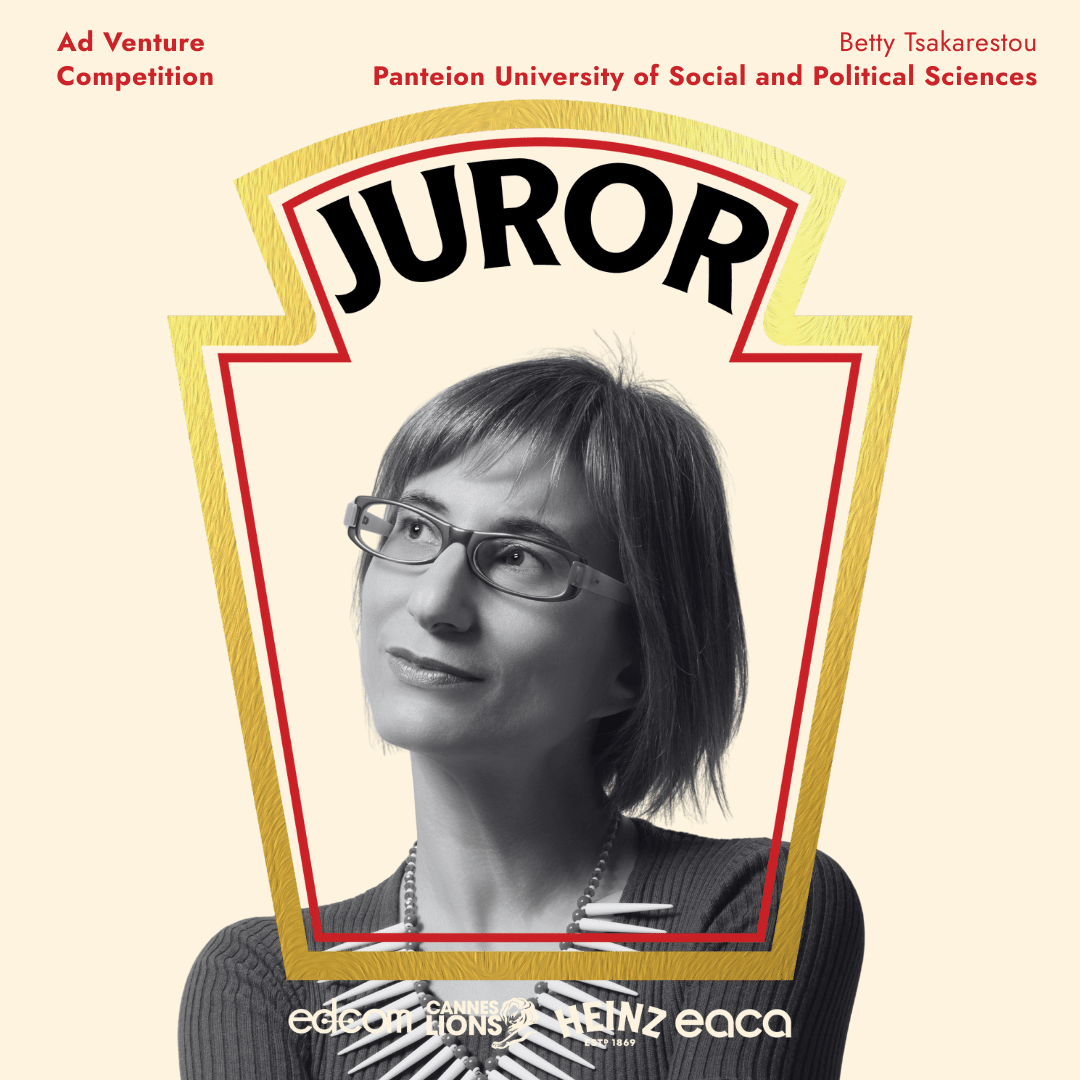
Betty Tsakarestou, Associate Professor and Director of ADandPRLAB , Panteion University of Social and Political Science
Hannah Harrison, Chief Sustainability Officer, WPP
Ekin Ilyasoglu, Managing Partner, Logaritma & Ad Net Zero Turkiye
Arnoud Versluis, Edcom President / Program manager Creative Business, Breda University of Applied Sciences
Charley Stoney, Chief Executive Officer, EACA
Mary O’Sullivan, Director of European Markets, Ad Net Zero Europe / International Markets

Access here the press release

-ends-

For more information, please contact Francesco Bottegal, Project Officer at Francesco.bottegal@eaca.eu.

Notes to Editors

About Ad Net Zero

Ad Net Zero is the advertising industry’s global, five-point climate action program, with the European chapter determined to be the leading force for sustainable change across the region. Action 5 of the framework focuses on leveraging advertising’s influence to support more sustainable consumer choices and behaviours, ensuring the industry is part of the climate solution.

About EACA

The European Association of Communications Agencies (EACA) represents more than 2 500 communications agencies and agency associations from nearly 30 European countries that directly employ more than 120 000 people. EACA members include advertising, media, digital, branding and PR agencies. EACA works closely with EU institutions to ensure freedom to advertise responsibly and creatively. For more information, visit www.eaca.eu. Connect with us on Twitter, Facebook & LinkedIn.


.

-ends-

April edcom Members’ Meeting | Summary

On 24 & 25 April, edcom members gathered at The Hague University of Applied Sciences (THUAS), in the Netherlands for their annual Spring meeting. The two-day programme consisted of a dynamic agenda that included Board meeting updates, a keynote presentation about virtual reality (VR) and the transformative role of immersive media, and an interactive breakout session focused on brainstorming solutions to today’s key challenges for edcom. Participants also discussed topics such as thinking of ways of how to increase edcom membership and seeking new opportunities to support and engage with members. The event concluded with the exciting announcement of the Ad Venture competition winner. Lastly, we had the chance to take an art tour around the THUAS campus, and visit a virtual room as well as neuromarketing lab at the university. Have a look at what the meeting consisted of:

The meeting kicked off with a keynote presentation by Marnix van Gisbergen, who was presenting the transformative role of immersive media, particularly VR, in shaping experience and behaviour. The speaker examined how VR adoption hinges on multiple factors: affordability, accessibility, the ability to connect and share content, and the ease of creating content. With examples ranging from Walmart using VR glasses to train employees, to applications in healthcare and addiction therapy, the talk highlighted VR’s increasing relevance in both B2B and B2C contexts.

Marnix emphasized that media evolution isn’t about replacement but augmentation, explaining how each new form adapts from the old—VR being no exception. Models such as the 5P XR Experience (presence, objects, proximity, perspective, place) and the four dimensions of tech experience (sensory, location, control, interaction) offered frameworks to understand how immersive media impacts communication strategy. From virtual job onboarding to emotional intelligence training, the takeaway was clear: VR is a powerful tool, but only if it enhances the user experience meaningfully and efficiently​.
Marnix also pointed out that media evolution should not be viewed as a cycle of replacement but of augmentation. New platforms build upon the logic, limitations, and strengths of prior media. Referencing theorist Michael Luhan, he noted that we often misjudge emerging media by applying outdated frameworks to understand them. VR, he explained, requires us to break from that mindset. Using two foundational models—the 5P XR Experience (Presence, Objects, Proximity, Perspective, Place) and the four technology experience dimensions (Sensory, Location, Control, Interaction)—he laid out a framework to better understand the immersive power of VR. When done well, VR offers a level of emotional and spatial presence that traditional media can’t replicate. Whether it’s for employee onboarding, empathy-building exercises, or brand strategy training, VR becomes a powerful tool only when it meaningfully enhances the user experience and aligns with clear strategic goals.

Perhaps the most controversial insights emerged as Marnix Van Gisbergen discussed some of VR’s most boundary-pushing use cases. In one conceptual application, VR was explored as a tool for grief therapy—allowing individuals to symbolically “reunite” with deceased loved ones in controlled digital environments. Although still ethically and emotionally complex, such technology opens a new frontier in mental health and closure. Another compelling use case included the development of virtual museums for people unable to travel (or have other reasons), such as the Van Gogh VR experience, enabling broader access to cultural education. VR is also being piloted in addiction therapy to simulate relapse scenarios and reinforce coping strategies in high-risk environments. The versatility of VR allows it to be equally valuable in professional, therapeutic, educational, and entertainment settings—from virtual orchestras to Cirque du Soleil performances and even in emotion recognition training.

As Marnix put it, the question is no longer whether VR is real or effective—but rather how real it needs to be and whether it is cost-effective for its intended purpose. With sensory possibilities expanding (visual, audio, even scent), and the ability to know your location or measure heart rate via R&D-integrated tools, immersive media is redefining the boundaries of engagement. The challenge for communicators and educators is no longer imagining what VR can do, but figuring out how best to implement it in ways that are ethical, impactful, and sustainable.

During the first day, participants split into three breakout groups, each focusing on a different priority topic. The aim was to advance discussions on key points while gaining insights from members’ ideas and ensuring that the outcomes are relevant and valuable. Those three groups were:

  1. edcom Podcast
  2. Membership Engagement & Growth
  3. Alumni Strategy

The key takeaways included:

edcom Podcast Series
In the breakout sessions, members proposed launching a video podcast series to showcase research, expert insights, and student work across edcom. It would feature interviews with keynote speakers and academics, such as Paul Springer, and highlight studies like those on Gen Z. A pilot episode was suggested to build excitement, with a focus on making the content suitable for SME visibility and social media reach.

Alumni Strategy
The group discussed ways to strengthen alumni engagement by redefining their role within edcom. Ideas included involving alumni in juries like Ad Venture, connecting them with industry partners, and ensuring edcom certificates hold value post-graduation. The goal is to create lasting, meaningful ties between alumni and the network.

Membership Engagement & Growth

As part of edcom’s ongoing development, a key focus is expanding membership to include institutions from currently underrepresented countries. We are also aiming to recruit new members through the support of EACA’s National Associations (NACs).

As part of our recruitment strategy, we focused on identifying effective ways to grow edcom’s network in currently unrepresented countries. One approach involves leveraging existing international partnerships already established by member universities, particularly those that have connections in target regions. Additionally, we aim to identify potential new members through the support of EACA’s National Associations (NACs), who can help connect us with relevant academic institutions in their respective markets.

Ad Net Zero Europe and edcom, in partnership with Effie Awards Europe, are launching a new student competition focused on sustainable transformation in advertising. Edcom students are invited to create a 3–5-minute video that brings Action 5 of the Ad Net Zero framework—driving sustainable behaviour change—to life. Find here more information about this exciting new initiative and the registration link.

Later on Day 1, attendees took part in a memorable and thought-provoking art tour led by Johan Nieuwenhuize, a celebrated visual artist and the art advisor at The Hague University of Applied Sciences (THUAS). Johan, whose work often explores the intersection of photography, perception, and urban space, brought his distinct artistic lens to the tour, offering participants an insider’s perspective on the curated collection of public artworks woven throughout the THUAS campus.

The tour consisted of a walk around the university’s interior and exterior spaces, highlighting how art has been intentionally embedded into the architectural and communal environment. Johan shared the stories, concepts, and artistic processes behind each piece—ranging from the hauntingly lifelike “Man on the Wood” sculpture, which evoked themes of presence and vulnerability, to the series of shells integrated into the floors and walls around the university, symbolizing connection to nature and subtle reminders of the surrounding Dutch coastal landscape.

Johan provided insightful commentary on how the works were selected and the role they play in stimulating thought, conversation, and introspection among students and faculty. Attendees came away with a deeper appreciation for the power of visual art to transform everyday spaces into sources of inspiration, critical inquiry, and cultural engagement. The tour was not only a cultural experience, but also an invitation to consider how creative environments support learning and well-being in higher education.

After an intense first day of insightful discussions, we kicked off the second day with the presentations of the Top 3 Ad Venture Teams.

Day 2 opened with the highly anticipated Ad Venture Student Competition Final, where three exceptional teams showcased their campaigns. Among the finalists, “Worth the Wait” from Fontys University of Applied Sciences, the Netherlands impressed the jury with their strategic thinking and creative execution.

A huge congratulations to other two teams who made it to the TOP 3:
– “We have wine, you have tea” – ESP Ecole Supérieure de Publicité, Communication et Marketing, France
– “Obviously British” – Paris-Pantheon-Assas University, France

The winning campaign, Worth the Wait from Fontys University of Applied Sciences, stood out for its powerful message: in today’s fast-paced world, where everything is expected instantly, taking time is often undervalued. Their idea challenged this mindset by highlighting that good things—especially meaningful, sustainable choices—are worth waiting for. Through a thoughtful narrative and creative execution, the team successfully connected this concept to the campaign brief, making a compelling case for behaviour change rooted in patience and long-term thinking. This proposal has resonated with the Jury as well as with Taylors of Harrogates and has won their sympathy.

Check out the winner of the competition here.

Would you like to see the presentations of the top three teams? Find the one for ‘Worth the Waithere, for ‘Obviously Britishhere and for the team ‘We have wine, you have teahere.

Following the final pitch, we made our way to the VR and Neuromarketing Lab, where we had the opportunity to explore the technology firsthand and gain insight into how it functions in practice.

On the second morning, members explored THUAS’ innovative Virtual Reality Room and Neuromarketing Research Lab. This hands-on networking session gave participants a taste of how THUAS incorporates cutting-edge research and technology into its teaching and investigation. From eye-tracking experiments to VR-based emotional response analysis, the experience highlighted how new tech is being used to better understand consumer behaviour and improve communication strategies in real time.

In the Neuromarketing Lab, Estelle Sjambar gave a live eye tracking demonstration, while in the VR Lab, an interactive session was presented by Martijn van de Wiel, alongside Flavio Van Soolingen and Yves Oude Elberink.


After 2 days of rich agenda, the programme ended with a networking lunch. What made this Spring meeting outstanding was undoubtedly the quality of the student’s Ad Venture pitches. As mentioned in an article by Marketing Beat, the winners of the Ad Venture competition 2025 stated: “We just want to make content and campaigns. We want to make an impact. We want to touch people and change lives.” (Giulia Wolf & Charlotte van Roessel). We saw great effort, drive, and passion from all three teams in delivering their messages. A special note of gratitude goes to Tim Hoppen and Inge Barkmeijer for their outstanding coordination and warm hospitality at The Hague University of Applied Sciences in the Netherlands. From seamless logistics to guiding us through the vibrant university environment, your support enriched the experience for everyone involved.

As we step into this exciting new chapter for edcom, we will work further on the remarks we gained in The Hague—and we look forward to our next meeting. Until then, thank you for being part of this inspiring journey.